
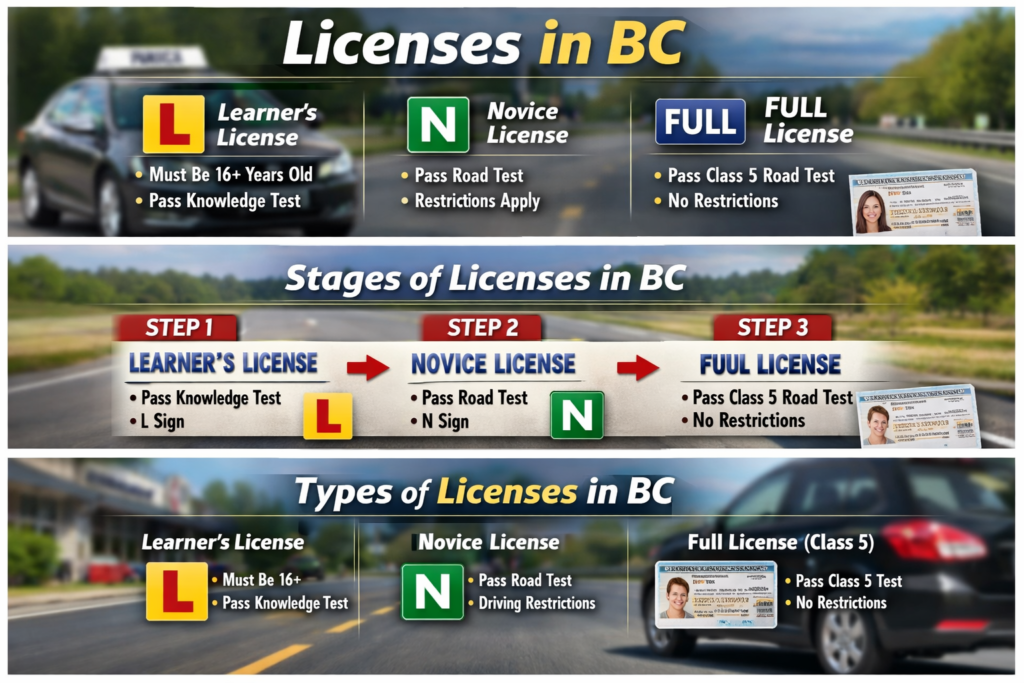
When people search for licenses in BC, they are usually looking for clear, reliable information about how licensing works in British Columbia. This includes driver’s licenses, learner permits, professional licenses, and other regulated permissions required to legally live, work, and drive in the province.
This page-style guide is written from a real-world, practical perspective, with a strong focus on driver licensing, because that is where most confusion exists. It reflects everyday questions asked by learners, newcomers, and residents who train with on road driving school, located at Kingsway, Vancouver, BC – V5V 3E3, Canada.
What Does “Licenses in BC” Mean?
The phrase licenses in BC generally refers to the different types of legal permissions issued by provincial authorities in British Columbia. These licenses regulate activities such as:
-
Driving vehicles
-
Operating motorcycles or commercial vehicles
-
Practicing certain professions
-
Running regulated businesses
Among all license types, driver’s licenses are the most commonly searched and misunderstood.
Why Understanding Licenses in BC Is Important
Licenses are not optional documents. In BC, having the correct license means:
-
You are legally allowed to perform an activity
-
You meet safety and knowledge standards
-
You are protected under provincial law
Driving without the correct license can result in fines, penalties, or insurance denial.
Driver’s Licenses in BC: The Most Commonly Searched Category
When most people search licenses in BC, they are actually asking about BC driver’s licenses.
BC uses a Graduated Licensing Program (GLP) to help new drivers gain experience safely before driving independently.
Overview of Driver’s License Classes in BC
Some of the main driver’s license classes include:
-
Class 7 (Learner & Novice)
-
Class 5 (Full License)
-
Class 6 (Motorcycle)
-
Class 4 (Taxi, rideshare, emergency vehicles)
-
Class 1–3 (Commercial vehicles)
Each license class comes with different privileges and responsibilities.
Class 7 License in BC
A Class 7 license is designed for beginners and has two stages:
Class 7L (Learner)
-
Requires supervision
-
No driving alone
-
Zero alcohol tolerance
Class 7N (Novice)
-
Limited passengers
-
No alcohol
-
Can drive alone
This stage focuses on building real-world driving habits.
Class 5 License in BC
A Class 5 license is a full, unrestricted driver’s license. It allows:
-
Independent driving
-
No passenger limits
-
No “L” or “N” sign
This is the goal for most drivers training with on road driving school.
Why the Graduated Licensing Program Exists
The GLP exists to:
-
Reduce accidents among new drivers
-
Encourage gradual skill development
-
Build defensive driving habits
Statistics consistently show lower crash rates among drivers who complete the program properly.
Motorcycle Licenses in BC
Motorcycle licensing falls under Class 6, which also uses a graduated system.
Stages include:
-
Learner motorcycle permit
-
Restricted riding
-
Full motorcycle license
Motorcycle licensing has additional skill and safety requirements.
Commercial Licenses in BC
Commercial driving licenses include:
-
Class 1: Tractor-trailers
-
Class 2: Buses
-
Class 3: Large trucks
These licenses require:
-
Medical exams
-
Advanced road testing
-
Professional training
Professional Licenses in BC
Beyond driving, licenses in BC also apply to professions such as:
-
Healthcare
-
Trades
-
Education
-
Security
These licenses are issued by regulatory bodies, not driving authorities.
Newcomers and Licenses in BC
New residents often ask:
-
Can I exchange my foreign license?
-
Do I need to retest?
-
How long can I drive on my old license?
The answers depend on:
-
Country of origin
-
Driving experience
-
Documentation
Training schools like on road driving school help newcomers transition smoothly.
Why Location-Based Training Matters
Driving in Vancouver is different from smaller cities.
Training near Kingsway, Vancouver, BC – V5V 3E3, Canada exposes learners to:
-
Dense traffic
-
Complex intersections
-
Bus lanes and bike lanes
-
Urban driving pressure
This prepares drivers for real testing conditions.
Common Mistakes When Applying for Licenses in BC
Many applicants struggle because they:
-
Rush tests
-
Underestimate road exam difficulty
-
Ignore local traffic patterns
-
Practice only in quiet areas
Structured instruction reduces these risks.
Why Professional Training Improves Success Rates
Professional training helps with:
-
Correct habits from day one
-
Test-specific expectations
-
Confidence under pressure
-
Long-term safety
This is why many learners choose on road driving school.
Testing Process for Driver’s Licenses in BC
The testing process usually includes:
-
Knowledge test
-
Vision test
-
Road test
Each stage builds on the previous one.
Why Road Tests Are Often Failed
Common reasons include:
-
Poor observation
-
Missed shoulder checks
-
Speed control errors
-
Hesitation at intersections
These are skill-based issues, not knowledge issues.
Insurance and Licensing in BC
Your license class directly affects:
-
Insurance rates
-
Coverage eligibility
-
Penalty severity
Full licenses often lead to lower premiums over time.
Renewals and Expiry
Most BC licenses:
-
Have expiration dates
-
Require renewal
-
May need updated photos or tests
Ignoring renewal deadlines can result in fines or suspension.
Pros & Cons of the Licensing System in BC
| Pros | Cons |
|---|---|
| Strong safety focus | Takes time to complete |
| Gradual learning process | Restrictions frustrate learners |
| Lower accident rates | Multiple tests required |
| Clear progression system | Requires patience |
| Better long-term drivers | Costs add up |
Why Patience Pays Off
Rushing through licensing stages often results in:
-
Test failures
-
Bad habits
-
Higher stress
Steady progression leads to confident, capable drivers.
Why “Licenses in BC” Is a Common Search
People search this keyword because:
-
Rules change
-
New residents arrive
-
Young drivers start learning
-
Upgrades become necessary
Clear guidance saves time and mistakes.
How On Road Driving School Supports Licensing Success
On road driving school helps learners by:
-
Providing structured lessons
-
Practicing real test routes
-
Building defensive driving habits
-
Preparing drivers mentally and practically
Location-based instruction improves real-world readiness.
Licenses in BC Are About Responsibility
Licensing is not just permission. It represents:
-
Public safety
-
Personal accountability
-
Legal responsibility
Proper training benefits everyone on the road.
Frequently Asked Questions (FAQs) About Licenses in BC
1. What does “licenses in BC” usually refer to?
Licenses in BC generally refer to legal permits issued by British Columbia authorities, most commonly driver’s licenses, but also including motorcycle, commercial, and professional licenses.
2. How many types of driver’s licenses are available in BC?
BC offers several driver’s license classes, including Class 7 (Learner and Novice), Class 5 (full license), Class 6 (motorcycle), and Classes 1–4 for commercial and professional driving.
3. What is the difference between Class 7 and Class 5 licenses in BC?
Class 7 licenses are part of the Graduated Licensing Program and include driving restrictions, while a Class 5 license allows unrestricted, independent driving.
4. Can newcomers to BC exchange a foreign driver’s license?
Yes, some newcomers may exchange their foreign license depending on their country of origin and driving experience. Others may need to take knowledge and road tests.
5. How long does it take to get a full driver’s license in BC?
It typically takes several years under the Graduated Licensing Program, starting with a learner license and progressing through novice stages before earning a Class 5 license.
6. Are motorcycle licenses separate from car licenses in BC?
Yes. Motorcycle licenses fall under Class 6 and have their own graduated process, training requirements, and road tests.
7. Do BC driver’s licenses have an expiry date?
Yes. Driver’s licenses in BC expire and must be renewed on time to avoid fines, suspensions, or loss of driving privileges.
8. How does my license class affect car insurance in BC?
Your license class impacts insurance rates and coverage eligibility. Drivers with full licenses typically qualify for lower premiums over time.
9. Why do many learners choose professional driving schools in BC?
Professional driving schools help learners understand test requirements, correct bad habits early, and gain confidence in real traffic conditions.
10. What happens if I drive in BC without the proper license?
Driving without the correct license can result in fines, penalties, insurance issues, and possible license suspension or vehicle impoundment.