
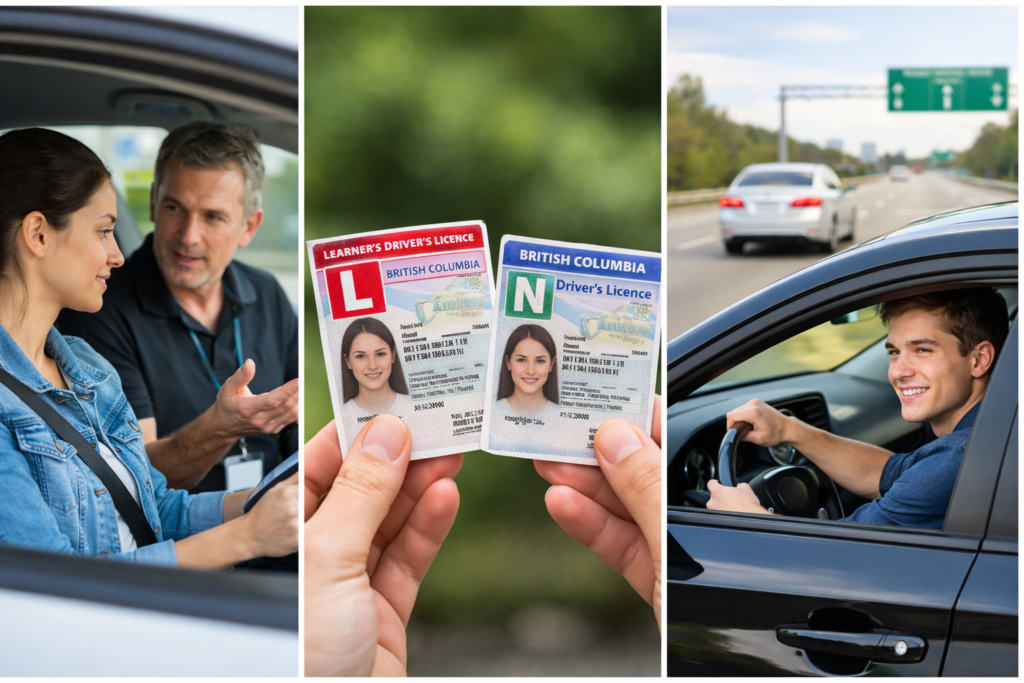
If you are searching for the difference between Class 5 and 7 BC, you are likely planning your driving journey in British Columbia and want clear, practical answers—not confusing legal language. Understanding the difference between these two licence classes is essential for new drivers, parents, immigrants, and anyone preparing for road tests in BC.
This page-style guide is written from real driving school experience, structured like an educational blog, and designed to help you make confident decisions. It also reflects the on-road training perspective of on road driving school, based in Kingsway, Vancouver, BC – V5V 3E3, Canada, where learners progress from Class 7 to Class 5 every day.
What Is a Class 7 Licence in British Columbia?
A Class 7 licence in BC is a learner or novice licence issued under the Graduated Licensing Program (GLP). It is designed for new drivers who are still learning and are not yet permitted to drive independently.
There are two stages within Class 7:
-
Class 7L (Learner)
-
Class 7N (Novice)
Both come with restrictions, which is one of the main differences when comparing Class 5 vs Class 7 in BC.
What Is a Class 5 Licence in British Columbia?
A Class 5 licence is a full, unrestricted driver’s licence in BC. It allows you to drive independently without the limitations imposed on learner or novice drivers.
This licence indicates that the driver has:
-
Completed the Graduated Licensing Program
-
Passed the Class 5 road test
-
Demonstrated safe, consistent driving skills
At on road driving school, most students see Class 5 as the final goal of their BC driving journey.
Difference Between Class 5 and 7 BC: The Big Picture
The main difference between Class 5 and Class 7 BC is driving independence.
| Area | Class 7 BC | Class 5 BC |
|---|---|---|
| Driving status | Learner / Novice | Fully licensed |
| Restrictions | Yes | No |
| Passenger limits | Yes | No |
| Alcohol tolerance | Zero | Standard legal limit |
| Supervisor required | Yes (7L) | No |
| Road test level | Basic & intermediate | Advanced |
Driving Restrictions: Class 7 vs Class 5
Class 7 Restrictions
-
No driving alone (for 7L)
-
Passenger limits (for 7N)
-
Zero alcohol tolerance
-
Display of “L” or “N” sign
-
Higher penalties for violations
Class 5 Privileges
-
Drive alone anytime
-
Carry passengers freely
-
No “L” or “N” sign
-
Standard alcohol rules
-
Eligible for commercial upgrades
This difference is often the most important factor for learners at on road driving school.
Passenger Rules: A Key Difference Between Class 5 and 7 BC
Passenger restrictions are strict under Class 7:
-
Class 7L: One supervising driver (25+ years, Class 5)
-
Class 7N: One passenger unless immediate family
With a Class 5 licence, these limits disappear entirely.
Alcohol and Zero Tolerance Policy
Another critical difference between Class 5 and 7 BC is alcohol tolerance:
-
Class 7: Zero tolerance—any alcohol is a violation
-
Class 5: Legal limit applies (still strictly enforced)
This rule alone keeps many novice drivers cautious and motivated to upgrade.
Road Tests: How They Differ
Class 7 Road Tests
-
Focus on basic control
-
Lane discipline
-
Observation skills
-
Hazard awareness
Class 5 Road Test
-
Higher expectations
-
Defensive driving
-
Complex traffic situations
-
Decision-making under pressure
At on road driving school, Class 5 preparation includes advanced mock tests and real-world route practice in Vancouver.
Insurance and Risk Factors
Drivers with a Class 7 licence:
-
Are considered higher risk
-
Often face higher insurance rates
-
Are penalized more heavily for violations
A Class 5 licence often results in:
-
Lower insurance premiums
-
Better driving record flexibility
-
Increased trust from insurers
Time Requirements Between Licences
You cannot move directly from Class 7L to Class 5.
Minimum timelines:
-
7L → 7N: At least 12 months
-
7N → Class 5: At least 24 months (can be reduced with approved training)
Professional instruction from on road driving school can shorten this timeline legally.
Why Most Learners Struggle With the Transition
Common challenges include:
-
Bad habits formed early
-
Lack of highway practice
-
Weak shoulder checks
-
Poor speed control
Structured coaching helps drivers move confidently from Class 7 to Class 5.
Driving Independence: The Real Value of Class 5
The biggest emotional difference between Class 5 and 7 BC is freedom:
-
No supervision
-
No restrictions
-
No signage
-
No passenger anxiety
This is why most learners set Class 5 as their primary goal.
Location-Specific Training Matters
Driving in Vancouver requires:
-
Experience with dense traffic
-
Knowledge of Kingsway routes
-
Understanding BC road culture
On road driving school, located at Kingsway, Vancouver, BC – V5V 3E3, Canada, trains learners in real traffic conditions—not empty parking lots.
Who Should Stay Longer in Class 7?
Some drivers benefit from more time in Class 7 if they:
-
Lack confidence
-
Drive infrequently
-
Struggle with traffic judgment
Rushing to Class 5 without readiness increases failure risk.
Who Is Ready for Class 5?
You may be ready if you:
-
Drive confidently alone
-
Handle highway merging
-
Read traffic early
-
Stay calm under pressure
This assessment is something on road driving school helps students evaluate honestly.
Pros & Cons: Class 7 Licence (BC)
| Pros | Cons |
|---|---|
| Ideal for beginners | Heavy restrictions |
| Safer learning environment | Passenger limits |
| Structured progression | Zero alcohol tolerance |
| Gradual confidence building | Must display “L” or “N” |
| Lower immediate risk | Cannot drive freely |
Pros & Cons: Class 5 Licence (BC)
| Pros | Cons |
|---|---|
| Full driving freedom | Higher responsibility |
| No restrictions | Stricter testing |
| Lower insurance over time | Advanced road test |
| Eligible for upgrades | Requires strong skills |
| No signage required | Mistakes cost more |
Why Training Makes the Difference
The gap between Class 7 and Class 5 is not time—it’s skill quality.
Professional instruction helps with:
-
Defensive driving
-
ICBC test expectations
-
Vancouver-specific challenges
-
Confidence under pressure
That’s why learners trust on road driving school for progression support.
Difference Between Class 5 and 7 BC for Immigrants
Newcomers often misunderstand:
-
Licence exchange rules
-
Driving experience credits
-
Test difficulty levels
A proper evaluation helps avoid unnecessary delays.
Common Myths About Class 5 vs Class 7
-
“Class 5 is easy” → False
-
“Anyone can pass without lessons” → Risky
-
“Restrictions don’t matter” → They do
Experience proves otherwise.
Frequently Asked Questions (FAQs)
1. What is the main difference between Class 5 and Class 7 BC?
The main difference between Class 5 and Class 7 BC is driving freedom. Class 7 is a learner or novice licence with restrictions, while Class 5 is a full licence with no driving restrictions.
2. Can I drive alone with a Class 7 licence in BC?
With a Class 7L (Learner), you cannot drive alone and must have a qualified supervisor. With a Class 7N (Novice), you can drive alone but still face passenger and alcohol restrictions.
3. Do Class 7 drivers have passenger restrictions in BC?
Yes. Class 7 drivers have strict passenger limits. Learners can only drive with one supervising driver, and novices can usually carry only one passenger unless they are immediate family members.
4. Does Class 5 have any passenger or supervision restrictions?
No. A Class 5 licence allows you to drive independently with any number of passengers, without supervision or signage requirements.
5. What is the alcohol rule difference between Class 5 and Class 7 BC?
Class 7 drivers must follow a zero-alcohol policy. Class 5 drivers follow the standard legal alcohol limit set by BC law.
6. Is the Class 5 road test harder than the Class 7 road test?
Yes. The Class 5 road test is more advanced and focuses on defensive driving, hazard awareness, complex traffic situations, and decision-making skills.
7. How long does it take to move from Class 7 to Class 5 in BC?
Typically, it takes at least three years under the Graduated Licensing Program. This time can be reduced with approved driver training from a professional driving school.
8. Can I lower my insurance by upgrading from Class 7 to Class 5?
Yes. Drivers with a Class 5 licence are usually considered lower risk, which can lead to lower insurance premiums over time.
9. Is Class 7 a permanent licence in British Columbia?
No. Class 7 is temporary and part of the Graduated Licensing Program. Drivers are expected to progress to Class 5 once they meet eligibility and skill requirements.
10. Why do many learners choose professional training before upgrading to Class 5?
Professional training helps drivers correct bad habits, understand ICBC test expectations, practice real traffic scenarios, and improve confidence—significantly increasing the chance of passing the Class 5 road test.