
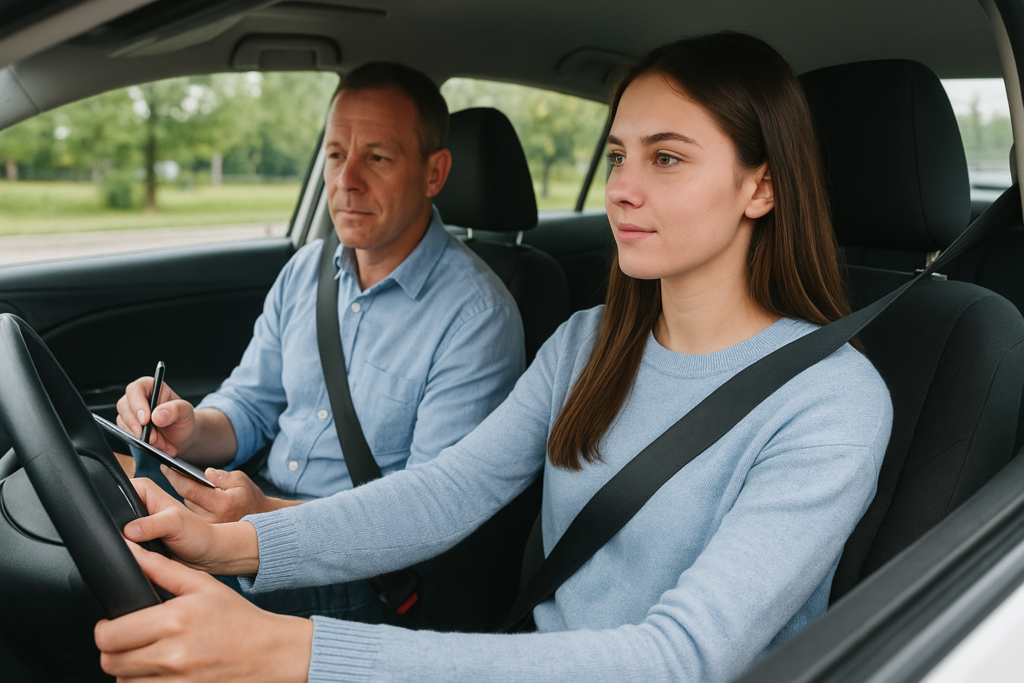
Learning to drive is an exciting milestone, but when you begin the journey in British Columbia, the process can feel a bit overwhelming. BC’s Graduated Licensing Program (GLP) is known for having some of the country’s strictest guidelines for new drivers, especially those holding a Class 7 licence. Understanding class 7 restrictions in BC is not only essential for avoiding penalties but also crucial for becoming a safer and more confident driver on the road.
This in-depth guide from on road driving school is designed to help new learners, parents, and guardians fully understand how the Class 7 licensing system works, what the expectations are, what you can and cannot do, and how to prepare for every stage of driving in the province. If you search for class 7 restrictions in BC, you’re in the right place. This is the most detailed and beginner-friendly resource you’ll find.
Whether you’ve just passed your knowledge test or you’re trying to help someone prepare for the next steps, this page will walk you through everything — from legal restrictions, driving limitations, tests, tips, common mistakes, and how on road driving school can support your journey all the way to the full Class 5 licence.
What Is a Class 7 Licence in BC?
A Class 7 licence is the first stage of the Graduated Licensing Program (GLP) in British Columbia. The GLP was created to reduce accidents involving new drivers by giving them experience gradually with certain restrictions in place.
There are two types of Class 7 licences:
- Class 7L (Learner’s Licence)
This is the licence you receive after passing the knowledge test.
- Class 7N (Novice Licence)
This is the licence you receive after passing the road test following the Learner stage.
When people look up class 7 restrictions in BC, they are often talking about both stages — the L and the N restrictions. Each stage has its own rules, limitations, and requirements that new drivers must follow.
This guide covers everything for both licences.
Understanding the Class 7 Restrictions in BC
BC has strict rules designed to ensure new drivers gain experience while minimizing risk. The restrictions may feel limiting, but they significantly reduce accident rates for new drivers.
Below, we break down everything you need to know.
Class 7L (Learner) Restrictions in BC
When people talk about class 7 restrictions in BC, the first major stage to understand is the L stage. After you pass your written knowledge test, you receive your L licence. This licence comes with several rules you must follow at all times.
Here are all the Class 7L restrictions:
1. You Must Have a Supervisor
You can only drive if you have a supervisor with you.
Your supervisor must be:
-
A fully licensed Class 5 driver
-
At least 25 years old
-
Sitting beside you in the front passenger seat
This rule ensures you have guidance and support while learning.
2. L Sign Must Be Displayed
You must always display the official L sign on the back of your vehicle.
It should be:
-
Clearly visible
-
Not blocked
-
On the exterior of the vehicle
Driving without the L sign will result in penalties.
3. Zero Alcohol and Zero Drugs
Even if you’re legally allowed to drink, as a Class 7L driver you must maintain:
-
0.00% Blood Alcohol Concentration (BAC)
-
Zero tolerance for drugs
If detected, even small amounts result in immediate licence suspension.
4. No Electronic Devices
You may not use electronic devices, even hands-free.
This includes:
-
Phones
-
GPS
-
Tablets
-
Smartwatches
-
Music devices
This is one of the key class 7 restrictions in BC because distracted driving is a major cause of accidents.
5. Speed Limit: Maximum 80 km/h
Learners must not exceed 80 km/h, even on highways where the posted limit is higher.
This helps learners develop control at safer speeds.
6. Passenger Restrictions
You may carry up to 2 passengers, but only 1 of them can be a non-immediate family member.
However, with the supervisor rule, your supervisor must always be in the front seat.
7. No Driving Between Midnight and 5 AM
You are not allowed to drive between 12 a.m. and 5 a.m. under any circumstances.
8. You Must Hold Your L for at Least 12 Months
You need a minimum of 12 months holding the L licence before you can take the Class 7 road test.
Class 7N (Novice) Restrictions in BC
Once you successfully pass the Class 7 road test, you receive your N licence. Even though you no longer need supervision, you still must follow BC’s strict novice driver rules.
Here are all the class 7 restrictions in BC for N drivers.
1. You Must Display the N Sign
Just like with the L sign, you must display the N sign clearly on the back of the vehicle.
If you fail to display the sign, you may receive fines and penalty points.
2. Zero Alcohol and Zero Drugs
Same as the L stage, you must maintain:
-
0.00% Blood Alcohol Concentration
-
No drugs in your system
3. Passenger Restrictions
Novice drivers can only carry:
-
1 passenger, unless
-
The passenger is an immediate family member, or
-
You have a supervisor in the front seat
-
This is one of the most commonly misunderstood class 7 restrictions in BC, and many drivers are fined because they ignore it.
Immediate family members include:
-
Parents
-
Siblings
-
Grandparents
-
Spouses
-
Children
Friends do not count as immediate family.
4. No Electronic Devices
Even hands-free devices are not allowed.
Novice drivers cannot use:
-
Phones
-
GPS
-
Headphones
-
Bluetooth
However, you may use a built-in vehicle system if you set it before driving.
5. You Must Hold the N Licence for at Least 24 Months
Most drivers must hold the N for two years before taking the Class 5 road test.
However, if you complete an approved driver training program (such as through on road driving school), you may reduce the length by up to 6 months.
6. Immediate Suspension for Violations
Novice drivers who receive:
-
2 or more penalty points, or
-
Any alcohol-related infraction
will have their licence suspended.
7. No Driving Between Midnight and 5 AM (For Some Situations)
N drivers can drive at night, but ICBC may impose night-driving restrictions depending on violations or safety concerns.
Why BC Has Class 7 Restrictions
Many people wonder why class 7 restrictions in BC are so strict. The answer is simple — safety.
New drivers are statistically more likely to be involved in crashes, especially during their first two years of driving. BC introduced the GLP to help reduce collision rates and build safer driving habits from the beginning.
Key reasons for strict restrictions:
-
Reduce distractions
-
Build safer habits
-
Limit high-risk situations
-
Improve confidence over time
-
Lower accident rates among new drivers
From the perspective of on road driving school, restrictions help learners progress more safely and confidently, making them better long-term drivers.
How to Prepare for the Class 7 Road Tests
There are two major road tests in BC:
1. Class 7L to Class 7N (Learner → Novice)
This test evaluates your basic driving skills.
2. Class 7N to Class 5 (Novice → Full Licence)
This test evaluates advanced skills, defensive driving, and highway behaviours.
Here is a full breakdown of each test, helping you understand what examiners expect.
Preparing for the Class 7L → 7N Road Test
This is your first major milestone as a learner. Understanding the class 7 restrictions in BC helps you prepare correctly.
Test Duration
45–60 minutes
What Examiners Evaluate:
-
Starting and stopping
-
Turning (left, right, U-turns)
-
Lane changes
-
Speed control
-
Observation and scanning
-
Right-of-way rules
-
Parking (hill, parallel, angle)
-
Signs and signals
-
Awareness of hazards
Common Reasons for Failing:
-
Not checking mirrors
-
Rolling stops
-
Speeding over 80 km/h
-
Incorrect lane positioning
-
Poor observation
A structured training program from on road driving school improves confidence and pass rates significantly.
Preparing for the Class 7N → Class 5 Road Test
This exam is more advanced.
Duration
45–60 minutes
What Examiners Evaluate:
-
Highway driving
-
Advanced merging
-
Multi-lane traffic
-
Emergency situations
-
Shoulder checks every time you move the vehicle
-
Parking in tight spots
-
Safe and efficient lane changes
-
Maintaining safe following distances
Things That Lead to Failure:
-
Unsafe lane changes
-
Poor merging onto highways
-
Speeding
-
Rolling through stops
-
Failure to identify hazards
Training with on road driving school helps you adopt advanced driving strategies that ICBC expects from experienced drivers.
Complete List of Class 7 Restrictions in BC (Summary)
Below is a full summary of the restrictions for quick reference.
Class 7L Restrictions
-
Must have a supervisor (25+ years, Class 5)
-
Must display L sign
-
Zero alcohol, zero drugs
-
No electronic devices
-
Max speed 80 km/h
-
Limited passengers
-
No driving between 12 AM and 5 AM
-
Must hold licence for minimum 12 months
Class 7N Restrictions
-
Must display N sign
-
Zero alcohol, zero drugs
-
Limited passengers (1 unless family)
-
No electronic devices
-
Must hold N for 24 months
-
Violations lead to suspensions
These are the complete class 7 restrictions in BC you must follow to progress safely and legally.
Pros & Cons Table for the Class 7 Licensing System
| Pros | Cons |
|---|---|
| Helps new drivers learn gradually | Restrictions can feel limiting |
| Reduces accidents among beginners | Nighttime rules can be inconvenient |
| Encourages safer driving habits | Strict penalties for violations |
| Requires supervision during early learning | Passenger limits may affect carpools |
| Improves long-term driving skills | Road tests can be stressful |
| Builds confidence over time | Longer process to reach Class 5 |
More About the Pros & Cons
While the restrictions may seem frustrating at times, they are designed for your safety. On the positive side, the gradual learning approach makes you a stronger, more responsible driver. On the negative side, you may feel limited — especially when it comes to night driving or carrying friends.
However, at on road driving school, we remind every student that these limitations are temporary, and the long-term benefits are significant. Graduated training is one of the proven ways to reduce accidents, improve driving behaviour, and build mature decision-making behind the wheel.
How Long It Takes to Get a Full Class 5 Licence in BC
Understanding class 7 restrictions in BC also means knowing the required timeline.
Here is the usual progression:
1. Knowledge Test → Class 7L
Must hold for: 12 months
2. L Road Test → Class 7N
Must hold for: 24 months
(Optional: If you take approved training at on road driving school, you may reduce this by 6 months.)
3. N Road Test → Full Class 5 Licence
Total Time:
-
With training: 2.5 years
-
Without training: 3 years
This timeline helps ensure you gain proper experience over time.
Insurance Rules for Class 7 Drivers
Insurance is another important part of the class 7 restrictions in BC.
For Class 7L Drivers
-
The supervisor’s insurance applies
-
You must follow all restrictions or insurance may not cover damages
For Class 7N Drivers
-
Your insurance premiums depend on:
-
Driving record
-
Number of violations
-
Accident history
-
Violations can cause major insurance increases.
on road driving school always teaches defensive driving habits to help new drivers maintain a clean record.
Common Mistakes New Drivers Make with Class 7 Restrictions
Even though the restrictions are clear, many new drivers still make mistakes — sometimes due to misunderstandings and sometimes due to overconfidence.
Here are the most frequent errors among new learners and novice drivers:
1. Forgetting the L or N Sign
This is one of the most common mistakes.
ICBC officers often issue fines for this.
2. Driving Friends While Holding an N Licence
Many novice drivers underestimate the importance of passenger limits.
3. Using Phones for Navigation
Even using a phone as a GPS is not allowed unless it’s properly mounted and preset.
4. Driving Over 80 km/h as a Learner
Speed restrictions apply everywhere — even on highways.
5. Not Doing Shoulder Checks
This is a leading cause of road test failures.
6. Misunderstanding Immediate Family Passenger Exceptions
Friends, cousins, or partners do not qualify as immediate family.
7. Driving Between Midnight and 5 AM as an L Driver
This is strictly prohibited.
Training at on road driving school helps new drivers avoid these mistakes through practice and professional guidance.
Frequently Asked Questions About Class 7 Restrictions in BC
1. Can a Class 7 driver drive on the highway?
Yes, but only Class 7N (Novice) drivers.
Class 7L drivers may drive on the highway only if:
-
The supervisor approves
-
They stay under 80 km/h
2. Can a Class 7 driver drive alone?
Only Class 7N drivers can drive alone.
Learners (Class 7L) must always have a supervisor.
3. Do I have to display the L or N sign all the time?
Yes. Not displaying the sign results in a fine and penalties.
4. How many passengers can a Class 7N driver carry?
Only one, unless all passengers are immediate family.
5. Can a Class 7 driver use Bluetooth?
No. Electronic device restrictions apply even to hands-free devices.
6. What happens if a Class 7 driver gets a ticket?
Tickets may lead to:
-
Higher insurance
-
Licence suspension
-
Restarting the N stage
7. How can I prepare for the road test?
Taking lessons from on road driving school is the best way to prepare.
Why Choose On Road Driving School for Class 7 Training
Driving is one of the most important skills you’ll develop in life. At on road driving school, we help new drivers:
-
Understand all Class 7 restrictions in BC
-
Build strong foundations in driving
-
Avoid costly mistakes
-
Improve confidence
-
Pass ICBC road tests
-
Learn defensive driving techniques
Our structured training programs are designed to help you become a safe, confident, and responsible driver — someone who respects the rules and understands the purpose behind each restriction.